Aarhus University · LITE Research Group
Geometry as a material design language.
My work concerns composite materials and structures in the broad sense, approached through three fields: fibre and laminated composites, adhesive bonding and mechanical metamaterials. What connects them is one question: how geometry and architecture can be used to design materials that are lighter, tougher and more sustainable.
Composite materials & structures
Everything here concerns composites in the broad sense: materials and structures made from more than one constituent, including hybrid materials and sandwich panels. Within that frame I work in three fields, and the most interesting questions often appear where they overlap. Select a field to read more.
Fibre & laminated composites
Fibre-reinforced and laminated materials: how they fail, how long they last, and how to design and manufacture them across scales.
Explore 02Adhesive bonding
Adhesion from surface to structure: how adhesives wet, cure and age, how surface chemistry and geometry control a bond, and how joints perform and fail.
Explore 03Mechanical metamaterials
Materials whose behaviour comes from architecture rather than composition: lattices, cut and folded sheets, foams, and natural architected materials such as bone.
ExploreA new platform for fatigue testing and fatigue-driven materials design, funded by the Carlsberg Foundation, supports work across composites, bonded joints and architected materials.
Where the fields meet
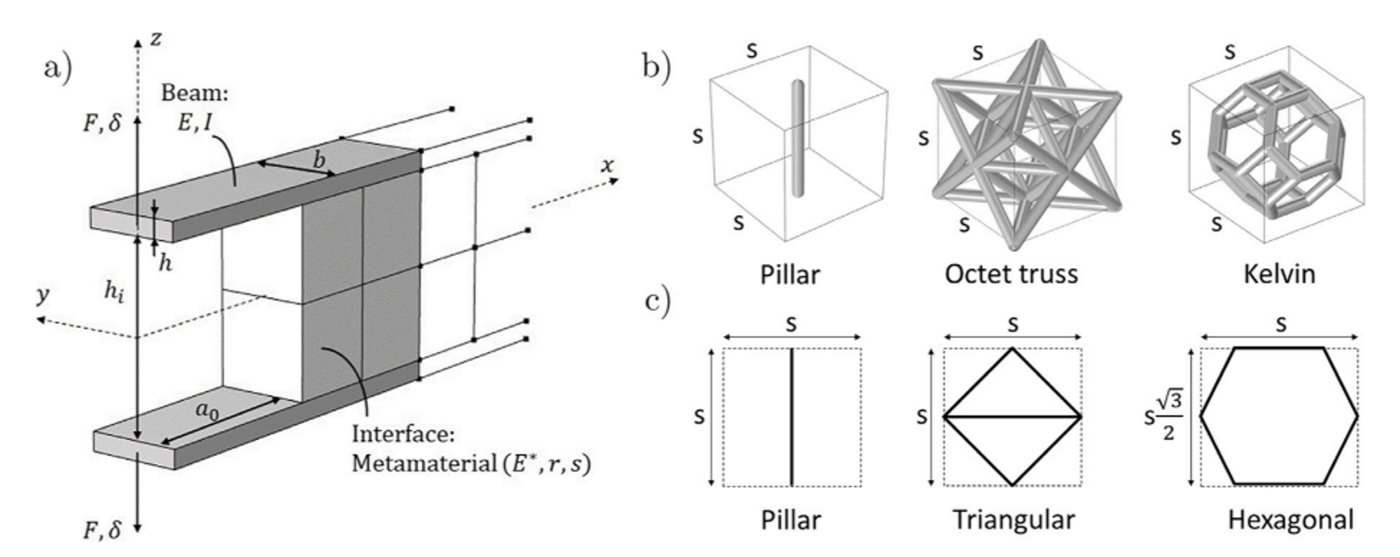
Architected interfaces
Putting architecture into the interface itself: geometry that guides cracks, separates strength from toughness, and lets bonded structures be taken apart.
Read moreGeometry as a design variable
The same base material, given a different geometry, responds in a completely different way. Using architecture, rather than chemistry, to tailor mechanical behaviour is the common thread in our work.